Benefits of QuickBooks Enterprise Hosting for U.S. Businesses and CPA firms 2026
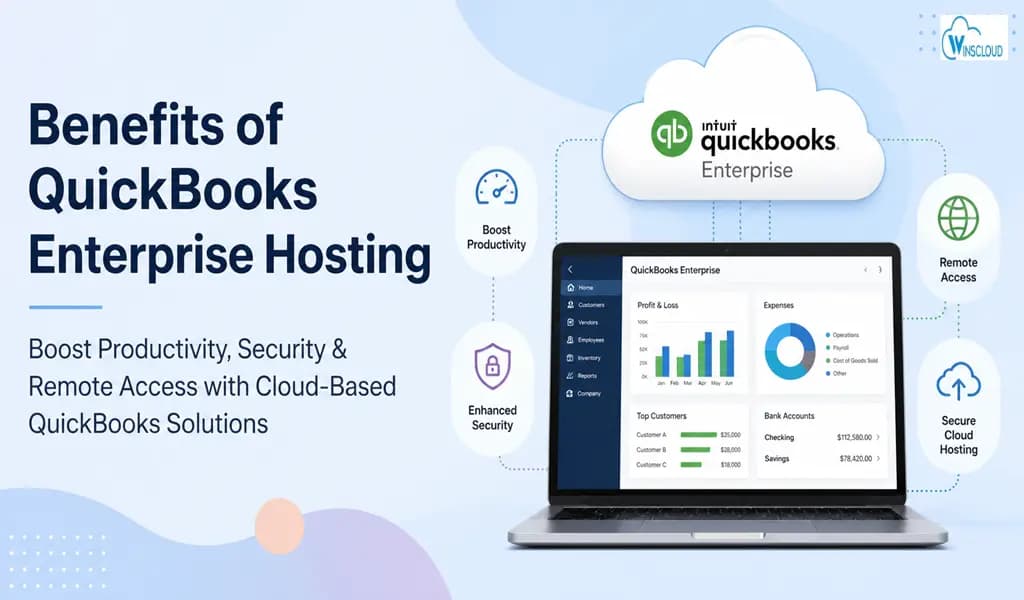
As U.S. businesses continue shifting toward cloud-first operations, accounting systems are evolving to keep up. QuickBooks Enterprise Hosting is one of the most practical upgrades for companies that rely on QuickBooks Enterprise but need more flexibility, security, and performance.
Instead of installing QuickBooks on a local desktop or office server, hosting moves your software and data to secure cloud servers. This allows authorized users to access the system anytime, from anywhere, without compromising speed or security.
In this guide, we’ll break down the real-world benefits of QuickBooks Enterprise Hosting and why it’s becoming the preferred choice for accounting firms, CPAs, and growing businesses across the United States.
What Is QuickBooks Enterprise Hosting?
QuickBooks Enterprise Hosting (also called QuickBooks cloud hosting) is a service that runs your QuickBooks Enterprise software on remote servers managed by a hosting provider. Users connect to it via the internet instead of a local machine.
This setup delivers the same functionality as desktop QuickBooks but with added cloud advantages like remote access, automatic backups, and enhanced security.
1. Access QuickBooks Anytime, Anywhere
One of the most valuable benefits is remote access. Whether you’re working from home, traveling, or managing multiple office locations, you can securely log in to QuickBooks from any device.
Why it matters for U.S. businesses:
- Supports remote and hybrid teams
- Enables real-time financial decisions
- Keeps operations running during disruptions
This flexibility is especially important for accounting firms handling multiple clients or businesses with distributed teams.
2. Enterprise-Level Data Security
Financial data is highly sensitive, and protecting it is critical. QuickBooks Hosting providers typically offer advanced security infrastructure that exceeds what most small and mid-sized businesses can implement in-house.
Key security features include:
- End-to-end data encryption
- Multi-factor authentication (MFA)
- Firewalls and intrusion detection systems
- SSAE-18 compliant data centers
This ensures your business data is protected against cyber threats, unauthorized access, and data breaches.
3. Automatic Backup and Disaster Recovery
Data loss can be costly and disruptive. With hosted QuickBooks, your data is automatically backed up on a regular schedule.
Benefits include:
- Daily automated backups
- Quick data restoration
- Disaster recovery in case of ransomware, hardware failure, or natural disasters
For U.S. businesses dealing with compliance and audit requirements, this adds an extra layer of reliability and peace of mind.
4. Real-Time Collaboration
QuickBooks Enterprise Hosting allows multiple users to work on the same file simultaneously with no need to send files back and forth.
Use cases:
- Accountants and clients working together in real time
- Internal teams accessing up-to-date financials
- Faster closing cycles and reporting
This eliminates version control issues and significantly improves productivity.
5. Lower IT Costs and Better ROI
Maintaining in-house servers and IT infrastructure can be expensive. Hosting eliminates many of these costs.
You save on:
- Hardware purchases and upgrades
- Server maintenance
- IT staff and troubleshooting
- Energy and storage costs
Most providers offer predictable monthly pricing, making budgeting easier for U.S. businesses.
6. High Performance for Large Company Files
QuickBooks Enterprise is designed for complex accounting needs but performance can slow down on local systems, especially with large data files.
Hosting solves this by using high-performance cloud servers.
Performance advantages:
- Faster file processing
- Minimal lag even with multiple users
- Optimized server environments
This is particularly useful for industries like construction, manufacturing, and wholesale businesses.
Also Read: ProSeries Hosting vs TaxWise Hosting
7. Scalability as Your Business Grows
QuickBooks Enterprise Hosting is built to scale. Whether you’re adding new employees, clients, or locations, your system can grow with you. This flexibility makes it a future-proof solution for growing U.S. companies.
You can easily:
- Add more users
- Increase storage
- Upgrade resources without downtime
8. Seamless Integration with Business Tools
Hosted QuickBooks can integrate with a wide range of third-party applications commonly used in the U.S. market. This creates a centralized ecosystem, reducing manual work and improving operational efficiency.
Examples include:
- CRM systems
- Payroll services
- E-commerce platforms
- Tax software
9. Reduced IT Burden
With hosting, your provider manages the technical side of things. This allows your team to focus on business growth instead of IT issues.
They handle:
- Server maintenance
- Software updates
- Security patches
- System monitoring
10. Always Updated with the Latest Features
Keeping QuickBooks updated manually can be time-consuming. Hosting ensures your software is always running the latest version. No more worrying about missed updates or compatibility issues.
Benefits:
- Access to new features instantly
- Improved system performance
- Enhanced security compliance
11. Multi-User Access with Permission Controls
QuickBooks Enterprise Hosting supports multiple users with customizable access levels.
You can:
- Assign role-based permissions
- Restrict access to sensitive data
- Track user activity
This improves both collaboration and internal data security.
12. 99.9% Uptime and Reliability
Downtime can directly impact revenue. Most hosting providers offer 99.9% uptime guarantees, ensuring your system is always available.
Reliability features:
- Redundant infrastructure
- Backup power systems
- Failover protection
This ensures business continuity, even during unexpected outages.
13. Compliance with U.S. Standards
Many hosting providers follow strict compliance frameworks relevant to U.S. businesses.
Common standards include:
- SSAE-18
- HIPAA (for healthcare-related firms)
- IRS data security guidelines
This helps businesses stay compliant while managing sensitive financial data.
14. Eco-Friendly and Sustainable
Cloud hosting reduces the need for physical hardware and energy consumption.
Environmental benefits:
- Lower carbon footprint
- Reduced electronic waste
- Efficient data center operations
For businesses focused on sustainability, this is an added advantage.
15. Competitive Advantage in a Digital Economy
QuickBooks Enterprise Hosting gives businesses the agility they need to compete in today’s market.
With real-time data access, you can:
- Make faster financial decisions
- Improve cash flow management
- Respond quickly to market changes
This level of responsiveness is essential for staying ahead in competitive industries.
Final Thoughts
Benefits of QuickBooks Enterprise Hosting is more than just a cloud upgrade; it’s a strategic move toward efficiency, security, and scalability. For U.S. businesses looking to modernize their accounting systems, hosting offers a clear path forward.
From remote access and real-time collaboration to cost savings and enterprise-grade security, the benefits are substantial. Whether you’re a CPA firm, a mid-sized company, or a growing enterprise, moving QuickBooks Enterprise to the cloud can significantly improve how you manage your finances.